Wednesday, May 21, 2008

Project POGI part 1: Change of heart

The blue 1995 Honda EG Civic LX me and my wife drive badly needs a make-over. It is a 13 year old car and hasn't been through any major face-lifts or general overhauls. Why? That's because the Civic is a very reliable car. The stock engine hasn't broken down all these years and all the major parts that has been replaced are the master brake and the left side mirror which was crushed by my lovely wife in a little accident she had a few years back. Although I prefer a "sleeper" look in cars--the way they look right out of the factory--and hate PIMP MY RIDE and FAST AND THE FURIOUS looking autos, I think its about high time we give this car the pampering and special treatment it deserves. He is christened by my wife as Pogi after all. For more information on the car, visit http://en.wikipedia.org/wiki/Honda_Civic

Part 1. Engine Swap
The 1995 (Ph) EG Civic LX has a 16-valve 1.5L non-VTEC non-fuel injected (carb) engine. Its engine code is Ph15. Since it has a carb style fuel delivery system, it wastes more fuel compared to that of a similar displacement but fuel-injected model. Moreover, we can't use the bio-ethanol shit that Shell sells at a cheaper price.

1995 LX carb engine (PH15)

"The primary functional difference between carburetors and fuel injection is that fuel injection atomizes the fuel by forcibly pumping it through a small nozzle under high pressure, while a carburetor relies on the vacuum created by intake air rushing through it to add the fuel to the airstream. The functional objectives for fuel injection systems can vary. All share the central task of supplying fuel to the combustion process, but it is a design decision how a particular system will be optimized. There are several competing objectives such as:
  • power output
  • fuel efficiency
  • emissions performance
  • ability to accommodate alternative fuels
  • reliability
  • driveability and smooth operation
  • initial cost
  • maintenance cost
  • diagnostic capability
  • range of environmental operation
Certain combinations of these goals are conflicting, and it is impractical for a single engine control system to fully optimize all criteria simultaneously. In practice, automotive engineers strive to best satisfy a customer's needs competitively. The modern digital electronic fuel injection system is far more capable at optimizing these competing objectives than a carburetor." (source: wikipedia)

After deciding to change the LX's power plant, the question which arises is this: What engine should I choose? Fortunately, I am not the first schmuck who has attempted to do this kind of thing. It is a common and general practice among low to mid-end Civic (generally, the Type-R folk do not fit in this category) owners all around the world to change their stock engines with something better. There are as many choices of engines as there are Civic variants--from the cheapest Ph16 ESi to the fastest and most expensive K20A found on the current FD Type-R. In choosing the right engine for the LX, there are two things I greatly consider to be the main factors: 1) performance; and 2) cost. I don't care if its the fastest one available if it costs more than my car, like the K20. But I also don't care how cheap it is if it won't meet my needs in fuel efficiency and velocity. Taking into consideration those important elements in making my selection, I have narrowed my choices into five (5) engines: The D15b2, D16A6 (ZC VTEC), D15B VTEC-E, D15B EK3 (D15Z7) and the famous B16A2. These three (5) are all VTEC engines. VTEC (Variable Valve Timing and Lift Electronic Control) is a valvetrain system developed by Honda to improve the volumetric efficiency of a four-stroke internal combustion engine. This system uses two camshaft profiles and electronically selects between the profiles. (To learn more about VTEC technology, you can visit these sites: http://en.wikipedia.org/wiki/VTEC; http://auto.howstuffworks.com/question229.htm; http://asia.vtec.net/spfeature/vtecimpl/vtec1.html)

D15B2
The D15B2 was produced for the Honda Civic VTi (EG4) in the years 1991-1999. The D15B2 is one of the more popular used Honda engines sought out by tuners today. The D15B has always been in the shadow of its larger, more powerful 1.6l brothers--perhaps due to the popularity of the B series engine by way of the Type-R monsters Honda, Mugen, and Spoon had popularized during the nineties. Nevertheless, the VTEC D15B is a very significant engine variant because Honda used VTEC to make it possible to generate as much power as a DOHC (double overhead camshaft) design from its SOHC (single overhead camshaft) configuration. Thus the VTEC-D15B generates 130ps and redlines at 7200rpm, ably replacing the DOHC ZC design despite having 100cc less displacement and one cam-shaft less! Also frequently overlooked is the fact that with 130ps from 1.5l, the specific output of the VTEC D15B is 87ps/l which actually compares favorably with the larger capacity DOHC VTEC designs such as the BB1 Prelude's H22A. The specific output of the VTEC D15B is in fact higher than the 190ps version of the H22A used on the previous generation Accord SiR. This type of engine can be purchased locally at Kanzai surplus (http://www.kanzaisurplus.tk/) or any other car parts shop in Banawe or elsewhere which sells JDM (Japan Domestic Market) shit at a cost ranging from 27 to 30k PhP, then you may trade your stock engine as payment for the installation on your car.
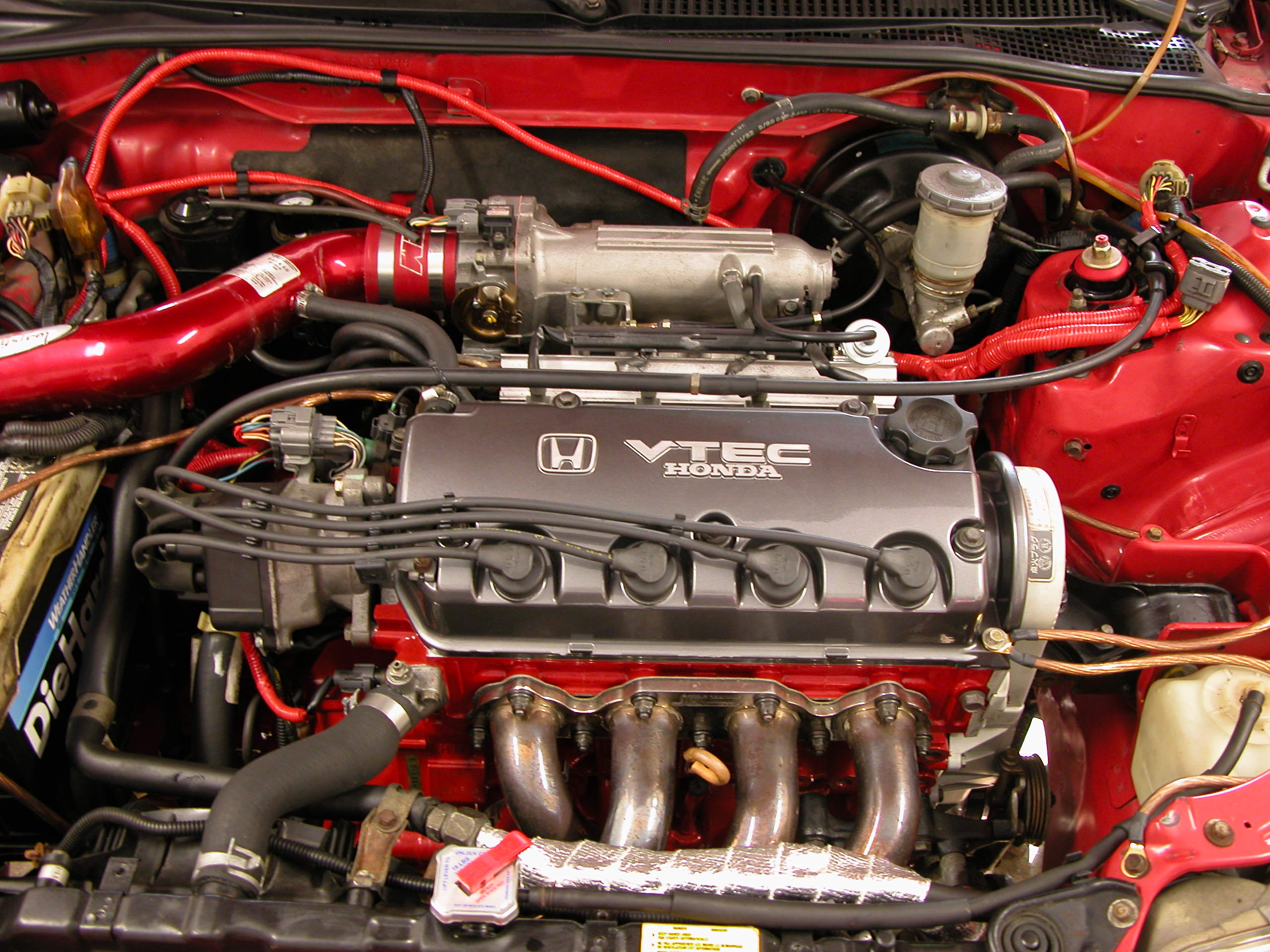

a light-tuned D15B2 engine


D16A6 (JDM ZC)
The ZC VTEC is the JDM counterpart of the D16A6 engine. Its origin can be traced to the 1988-1991 EF Civics and CRX's. Basically, it is the 1.6L brother of the D15, with slightly more torque and consumes a little more fuel. I think this engine sells at about the same price range (or possibly even cheaper) as the JDM D15Bs at Banawe or Evangelista shops.


a modded D16A6 (ZC) on a 1996 EK sedan

D15B VTEC-E
The D15B VTEC-E is the economy implementation variant of the D15B series engine. It has slightly lower horsepower but consumes less fuel. When VTEC became available, two versions of VTEC D15Bs were developed for the EG-series (1991-1995) Civic. One is the well-knowned VTEC-E which delivered an incredible 20+km/l mileage. The other is the VTEC D15B, a power implementation. The VTEC-E variant costs about the same as a power implementation D15B but harder to find in local JDM importers since it is not a tuning engine in the strict sense. It is just not a typical "rice boy" engine since its focus is on fuel economy and not velocity.

fuel efficient D15 VTEC-E

D15B EK3 (D15z7)
For the EK-generation Civics, development on the D15B engine finally culminated in the now famous 3-stage VTEC D15B. This engine was used on the 6th generation Civic EK3 VTi and Ferio Vi. 3-Stage VTEC D15B is a wonder engine in that Honda took the technologies of the VTEC-E and VTEC-D15B engines and merged them into one single engine. This implementation allowed Honda to give us an engine that is both economical and powerful. Although with the same amount of max Hp and Torque, the other D15B is quicker as it reaches its peak at a lower RPM than the 3-stage. The 3-stage VTEC system was only offered in the Asian markets and not in the US market at all.

D15B EK3 (D15z7) 3 stage VTEC

B16A2
"The B-series Honda DOHC engines are popular automotive engines from the modern series of Honda engines. They are good performers from the factory having models with around 126hp to around 200hp, with even some models having a redline over 8,900 rpm. They accept high performance modifications well without much risk to reliability." (source: Wikipedia) The B16A2 was produced for the Honda Civic Si in the years 1999 -2000. The B16A2 is one of the more popular used Honda engines sought out by tuners today. It also costs double compared to that of a D15b. It is commonly found on local EK SiRs and the EK JDM Si and its highly praised B & C variants are on USDM and JDM Civic Type-Rs from 1996-2000. To know more about this venerated Honda power plant, click: http://www.hondatuningmagazine.com/tech/0203ht_acura_honda_b_series_engine/index.html


B16A2 (with B16C valve cover)

I have not yet decided on which of these engines I would choose to purchase and install on the LX. I know this change might possibly bring more problems than satisfaction--afterall, they are not new engines but rebuilt or surplus--so I am really careful on making the decision. Maybe I'll talk to CP of H3 for some advice. He recently built a 1990 CRX with a K20 engine. Hopefully, by the end of the year the LX will have a new power plant. So folks, feel free to type in your comments if you have any insights on this engine-swap deal I am planning.

Coming soon: Dancing Shoes (suspension & wheel tuning).

Note: ...now my blog sort of looks like an old crappy issue of sport compact car magazine.

Tuesday, May 20, 2008

Mugen Power!


Mugen Motorsports (M-TEC Co., Ltd) (無限) is a Japanese company formed in 1973 by Hirotoshi Honda, the son of Honda Motor Company founder Soichiro Honda, and Masao Kimura. Mugen, meaning "Without Limit", or "Unlimited", (hence the commonly placed word "Power" after, denoting "Unlimited Power") is an engine tuner and parts manufacturer closely associated with the Honda Motor Company. Despite the family connections, however, Mugen is not, and has never been, owned by Honda. Things were complicated for some time as Mugen was owned and run by Hirotoshi Honda, who has been the major shareholder in Honda since his father's death in 1991. (source: wikipedia)


The photo above is the current incarnation of the Mugen Civic.


The Mugen Civic Type-R in action


Monday, May 19, 2008

Happyness


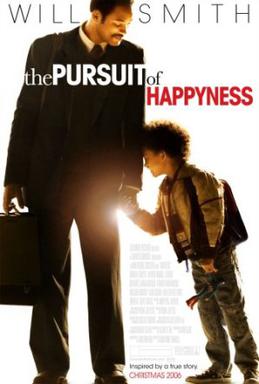
Have ya'll seen that Will Smith movie, "The pursuit of happyness"? Do you know what it tells us? It tells us that happiness can be bought. All the struggles that he and his family went through was by reason of the lack of fuckin' money. He ain't got no dough to pay the rent, to pay the daycare for his kid, keep his wife happy, et cetera, et cetera. The motherfucker was a goddam loser. Then he turned his life around. He got it around by makin' money. All that shitty movie ever was about was money. We're all fools cryin' while watchin' and old Willie is at his Malibu mansion sippin' Crystal thinkin' we're suckers.

For me, happiness is a state of mind. It is a by-product of freedom. It is a state of mind because we only know it inside our heads. Looking happy and actually being happy are not the same animals. I believe that "Hindi lahat ng gusto nating gawin, pwede...at may mga kailangan tayong gawin, kahit hindi natin gusto." (We can't do everything we want, and we need to do some things even if we don't want them.) If we are doing more of the things that we want compared to those that we need to do but don't want, then we are happy. If we are stuck with doing the things we need to do but don't want, we're unhappy. The freedom to do the things we want is the yardstick of happiness.

Friday, April 25, 2008

Testimonial Dinner Speech


Dr. Florentino S. Cayco III (my ninong Bubut), Dean Jose Sundiang, Dean Mariano Magsalin Jr., My dear Arellano Law professors, especially those who know me better than others--Atty. Tom Uribe, Atty. Jimmy Soriano, Atty. Mayet Turingan, Atty. Ed Espina and Atty. Pedro Diwa--who I respect very much and think that they are really good at what they do, if not the best here in Arellano and perhaps anywhere else; all of the patient and understanding law library staff, the friendly and very approachable staff at the Dean's office, my classmates, dear friends, ladies and gentlemen, a pleasant good evening to you all.

I clearly remember my first days in law school. I was enrolled in the executive program and had classes only on Saturdays and Sundays. Saturdays I had Persons and Family Relations with Atty. Mayet, and Statutory Construction with Atty. Agnes. On Sundays, I had Legal Research and Writing with Atty. Jean Bacorro and Criminal Law I with Atty. Pedro Diwa. Most of them, during the first meetings asked, the question "Why do you want to become a lawyer?" I gave a different answer for each one, simply because I cannot share my true reason. You see, I was working as an ordinary employee back then and I was for the most of it, frustrated with my career. I was occupied with the belief that there should be more to my life than waiting for the 15th and 30th of the month for my meager paycheck.

When I was a child, I had three (3) clear ambitions. I wanted either to become an astronaut, a priest, or a lawyer. Since I found out very early on that there is no Philippine counterpart of NASA, my dream of being the Filipino Neil Armstrong became highly improbable. Prior to adolescence, I was convinced of becoming a priest. I have witnessed my cousin Fr. Rico's Ordination and I thought that priesthood was the perfect profession for me. At home, I was consecrating our meals whenever my father wasn't around. It was really funny. I would raise a pork chop like a priest would raise the host and say "Take this all of you..." My brother and sister got a kick out of it every time I do the stunt. My father found out about it and under pain of a severe belting, he banned me from consecrating our lunches ever again. Like most middle-class Filipino children, I went to a Catholic school, and my favorite saint was St. Agustine--that's because he was practically a goon on the early part of his life and through the prayers of his mother, St. Anne, he turned and became one of the staunchest intellectual defenders of the church against heresy. St. Jorge, can you imagine that? I was about to go to seminary school but my parents were not so crazy about the idea. Instead, they sent me to the University of Santo Tomas. A little shortly after that, I turned thirteen (13) and alongside the beginnings of my mustache, and those fancy trainer bras of my female classmates, I forgot all about becoming a priest. Employing a basic process of elimination, the only ambition left for me to pursue is to become a lawyer. Here I am now. I have lived out one of my childhood dreams.

To what things do I owe my success in the Bar Examinations? I have made a Top Ten list, just like in The Late Show with David Letterman.

10. Planning--Law 29 of Robert Green's 48 Laws of Power is "Plan All the Way to the End." In preparing for the bar exams, you must plan all the way from the beginning--from the very first day of law school, not on the first day of taking review subjects, and definitely not on the very first day of pre-bar review. Atty. Diwa told us that, on the very first day I saw him bang the table with his open hand.

9. Reading--The best advice to a law student, or a bar candidate is to read. I like to read a lot so this part is not too much of a problem for me.

8. Writing--I handwrite my own notes and try to carefully and faithfully make them the best I can, so I won't need to go back to the book where I copied them. By the time I finished reading what I wrote about a dozen times, I have memorized them and I won't have to study my thick book too much.

7. Talking--I talk about what I have read with my classmates who became my good friends, not only those who also belong to ALAS, but with other students as well. A good healthy discussion helps to retain what I already know, correct what I may have misunderstood, and supply me with what I do not know.

6. Reading--Have I mentioned that reading is the best advice? I read everywhere, in my bedroom, in the library, in the ALAS office, on the stairs, underneath a tree, in the train, in the cab, in the rest room, anywhere. In fact, ever since I was a child, I cannot finish my business in the C.R. without reading something. Sometimes, I read the back of soap cartons and shampoo bottles. Reading is the only way to go. I cannot over-emphasize on this point.

5. Listening--Reading, writing, and especially talking is not enough. Often, I learn and unlearn many things by listening to professors and more so from my friends. Sometimes, you think you know but in truth, you have no idea. It's a two (2) way street: talking and listening. One talks and the other listen. Then the other talks and the other takes his turn to listen. The end result is learning the right things and unlearning the wrong things you previously thought were right. But keep an ear close to your brain. Be a skeptic. Always double check with the books. Just like in math, by checking your answers, the process is complete and you could truly say that you are correct.

4. Dressing up--Every time an examination comes my way, I always dress up like I'm going to a child's christening. I tuck in a polo shirt, wear some nice pants and clean my shoes. It has become my habit. I tell myself "If I have a hard time on this exam, at least I look good so maybe it won't be noticed that my ears are bleeding." During the bar exams, I wore green shirts all the time. It was silly because my only reason is that the pre-dominant color in the La Salle campus is green so I had to wear green to absorb the powerful and daunting aura of the "slaughter-house." It's silly but it eventually worked.

4. Keeping friends close--Keep your friends close, and your ALAS friends even closer. I am very lucky to have such intelligent friends. From the team work in the classroom recitations, to brainstorming after reading sessions during the review, the road to the bar examinations wouldn't be as exciting, challenging and fun without my friends. Special mention goes to Atty. Ato, Atty. Jonell, Atty. Mary Ann, Atty. Babes, Atty. Agnes, Atty. Joel...and the rest of the ALAS bar candidates last year.

3. Relaxing--I relaxed by watching Koreanovelas (Jumong, Love Story in Harvard), countless movies, reading Harry Potter, Naruto, One Piece, Death Note, Bleach--walking my dogs, writing blogs, having massages every bar Saturday at the Century...whenever I think I need a break from studying, I took a break and relaxed. I believe that stress is the number one (1) enemy of the bar candidate.

2. Loving--I felt I needed a "whole lotta love" during this gruesome period and I got more than enough from my ex-girlfriend (who is now my lovely wife), my parents, my brothers and sister, my mother and father-in-law, my brother and sisters-in-law. I dedicate my passing to all my loved ones.

1. Praying--No elaboration is needed. My success is but a faint glimmer of God's everlasting glory.

Now how could I squeeze all these in a three (3) minute speech on the podium?

Wednesday, April 23, 2008

The Anti-Hero


Do you ever root for the villain to win? Are you at times sick of the fact that the hero always win? That's the reason why I don't like Steven Seagal and Van Damme movies. I won't pretend I haven't seen any but when I fortuitously come across one while surfing channels, sometimes I stick on it just to find out if Stiffy-Steven or Jean-Claude gets whacked in the end. And don't get me started on their outfits.

Seriously, sometimes, the antagonist in the plot is more interesting than the protagonist. Take Dr. Doom for example. In my book, he's way cooler than the Fantastic Four. He's super-strong, an evil genius, and he wears this really menacingly sick iron mask with a little dark green riding hood. In contrast, Reed Richards--apart from having a incredibly stupid sounding name--stretches. Stretch and you're a hero. That's the stupid Reed Richards character is all about. My dick stretches about three to four times its original size but I don't call it a hero. Well at least I won't go draw a comic book about it.

In the movie "Untouchables," there starred my all time favorite actor Bobby De Niro opposite Kevin Costner. Bobby was Al Capone, and the Californian Dork played Elliott Ness. I mean, come on, in the real world, can The Bodyguard shine Bobby De Niro's shoes? I didn't think so. When I first saw the movie, I wished so hard that Costner's character should die I pissed my pants a little bit. By the way, the baseball bat scene in which Capone bludgeons a mobster is loosely based on an actual 1929 incident when Capone bludgeoned three (3) mobsters to death; Albert Anselmi, Jo "Hop Toad" Giuinta and John Scalise.

Here in our country, I can't help but to root for the anti-hero, because the supposed protagonists are really crooks. The current administration is the number one crook, who holds out itself as the hero. After so many fuckin' photo-ops, even they believe that they are the goddam good guys. One law school professor, once said, "Corruption is institutionalized in the framework of our government." I believe that the government is actually against national growth. If we take a look at most successful economies, we'll discover that they began from humble entrepeneurial endeavors of people who believed in their own ablilities and had the courage to pursue their dreams. I'm talking about the pioneers, businessmen of any kind, they be inventors or bootleggers. In the old economy, the way to succeed was to "build a better mousetrap." What better way to build a better mousetrap if you don't copy the original? My father used to tell me that when he was very young, all things made in Japan were crap. Mostly, he adds, they were cheap imitations of U.S. and European made products, and they were consistently poor in quality. Of course, they were considerably cheaper so folks bought them, warts and all. How things have changed! When I was growing up, all the best products are made in Japan. The best bicycles, the best toys, the best video-games, the best everything. The Japanese built a better mousetrap. These days, China (that includes Taiwan) is the new Japan. Chinese products flood the domestic markets. As a consumer, I can clearly see the improvements in the quality of their products in less than a ten (10) year span. Some Chinese products are now competitive in quality even against the best in the market. Here's my point: The Chinese, and the Japanese before them didn't fuck the entrepeneurs. Their governments weren't busting the balls of the bootleggers for infringing copyrights and patents owned by some foreign schmucks. Their governments actually encouraged and induced local enterprise advancement, by fostering an environment conducive to business growth and expansion. Whereas in this country, the government does all it can to make a quick buck.

My uncle (Don Marcelino), together with my father (Don Bonifacio) and other friends of the family, own and operate some small business. One of these meager businesses is a Liquefied Petroleum Gas (LPG) Refilling Plant. All these businesses are, in the eyes of the law, legal. The bosses faithfully comply with all laws, rules and regulations pertinent and relevant to their businesses. All documents, permits, taxes, and what-else-the-fuck-have-you are secured and with reasonable promptitude. However, in compliance with these legal requirements, the people in government--apart from the legally mandated fees and charges--charge and collect ridiculous sums of money from the businesses to go directly into their pockets. Some describe it as the "cost of doing business," or padulas money, even if it is totally unnecessary. The main thing is this: even when you go legal, you get fucked on the ass by this government. From the City Hall to the Office of the President, all them snakes and alligators want to bleed everyone dry.

It is bad enough that local businessmen tolerate this sub rosa culture, but an even greater and previously unimaginable evil have spawned in this GMA adminstration: The Presidential Task Force. Along with the super-irresponsible television media that we have, the elite of the elite, top-of-the-foodchain crooks in government have rallied under the presidential banner to create chaos and to extract even more cash from businessmen. Under pain of prosecution and negative media exposure, these motherfuckers extort money from businesses like those belonging to my family. Our LPG refilling plant has been raided by task force after task force and featured on TV crime shows on both big channels. These task force fuckers think they are Elliot Ness and the untouchables. They climb the gates, force open the locks, shout various uneducated profanities, and brandish their cheap U.S. surplus M-16 Armalites and WWII M-14s at my father's poor employees who are there to make an honest living refilling cooking gas. One of them, my father's cook, was even sent to prison for a couple of nights after a task-force raid. Did he make the monggo stew too fuckin' salty? Everytime they do this, they only want one thing: money. The cops want money, the newsmen want money, the government lawyers want money, the judge wants money, the mayor wants money...what every single authority-type motherfucker wants is money. It is not enough anymore to simply keep their beaks wet. These birds have turned into vultures and they want flesh and blood. They are making a killing. How can legitimate business survive in an environment like this?

Perhaps it is time for us to make the jump from hero to anti-hero.